Showing posts with label food. Show all posts

Monday, March 7, 2016

For Rich or Poor: Creepy Victorian Food


Man people still didn't have a kitchen at home in the 1890s. In tenement houses, whole families lived in a single room , which might be shared with as many as six other whole families. Eating out, consequently, was something many people did, though not in the nicest restaurants and maybe not the most appealing dishes.


This blog brings us ten weird Victorian street food, including: sheep’s trotters (those are the feet), hot eels, saloop, plum duff (basically Christmas cake), pickled whelks, donkey or ass’s milk, bloaters, ginger beer, rice milk, and blood.


Saloop was originally a kind of milky tea that dated back to the seventeenth century and was made from ground orchid roots. The stuff you would buy on the streets of 1890s London was made from sassafras bark and sweetened with sugar. I want to try some because “sassafras” and “saloop” are both words that are fun to say. Sassafras bark thickened the drink and worked as a stimulant in place of coffee. Saloop’s popularity declined when people started thinking of it as a remedy for venereal disease, making public consumption of the beverage a little awkward.


Pickled oysters, whelks, and periwinkles were cheaper because the pickling process preserved them, obviously! There’s an old British insult that you “couldn’t run a whelk stall,” and that refers to these enterprises, which were regarded as very simple to run.

Donkey or ass’s milk was more readily available in winter and popular with the ladies, who thought consuming dairy made them appear more youthful. I think that Victorian rice milk must have been interchangeable along with the popular curds and whey and also popular with the ladies. Lady street vendors were usually the one’s selling rice milk, which was more like rice pudding and, like all of these street foods, consumed on the street.

The author of the blog that listed all the foods above admits that blood was more of a barn food than a street food and that it was used to treat consumption. People, often ladies, with consumption would drink it by the glass, hot and fresh from the animal.

It is so easy to read a list like that and think that poor Victorian Londoners in the 1890s ate a load of disgusting food, but then we find this recipe for brain balls, which were used as a garnish for turtle soup. This would be prepared for someone, who had a kitchen, and they probably paid someone to make it! Just reading a recipe that uses actual animal brains is creepy!
1. To Cook Brain: Combine all ingredients for in medium saucepan, except for brain; simmer 30 minutes. Add brain, simmer gently 10 to 15 minutes until soft but firm (about 180 degrees on an instant read thermometer). Transfer to plate, covering with damp towel. Cool to room temperature. Refrigerate until cold. Chop fine; reserve.
2. To Make Brain Balls: Combine all ingredients, except brain, until mixture is smooth. Add chopped brain and mix until combined. Scoop out 1 teaspoon portions and drop in dried fresh breadcrumbs. Heat oil in 10-inch skillet over medium heat until oil reaches 375 degrees; cook balls, until golden and crisp all around, about 2 to 4 minutes; transfer to paper-towel lined plate and season with salt.
Did I mention that was a garnish for turtle soup? Mock turtle soup, as in Alice in Wonderland, was pretty common, but there was an actual restaurant in London that kept aquariums full of turtles to assure patrons that they were getting authentic turtle soup.


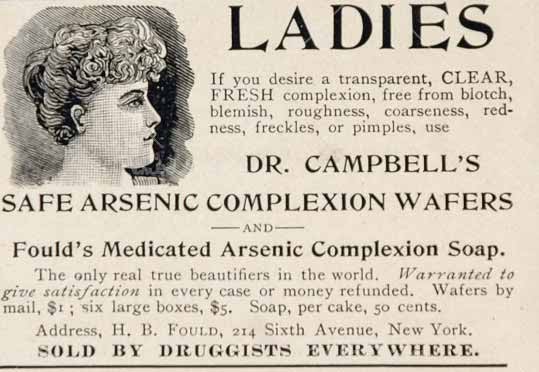
I’d still rather eat a bowl of turtle soup garnished with brain balls than eat a ladies’ complexion wafer, which was laced with arsenic. “Doctors” promoted arsenic to help ladies achieve the pale look that was so fashionable at the time. The arsenic helped in this process by killing your red blood cells. The Ultimate History Project has a lot more information on the arsenic eaters here, if you are interested.

The question "would you like some ass milk with your brain balls and turtle soup?" makes it easier to understand the popularity of fasting girls.


Fasting girls were women, who promoted the idea that women didn’t need to eat to live. Of course, they had people sneaking them food, but these women would go extended periods of time not eating, eating very little, or pretending not to eat. Some became famous for it, some died tragically in their attempt.

Follow me on Twitter @TinyApplePress and like the Facebook page for updates!

Wednesday, December 30, 2015

Perchta and the History of Oliebollen


It's the night before New Year's Eve and Willie Wilde's best friend, Alexander Teixeira de Mattos (Tex) comes to call on him at Lady Jane's house. A Dutchman, Tex brings with him a basket full of pastries and, knowing how much Lady Jane loves folktales, a story! This might, or might not, have happened, but is the pretext I'm using to write about olibollen.

Oliebollen are a traditional Dutch food eaten at New Year's. The name literally translates to "oil balls" and they were the inspiration for the American invention of the donut. I was always made to understand that these treats are so fattening that it would be bad for you to eat them more than once a year, but the history of Oliebollen and the story Tex would have told Lady Jane are the real New Year's treat.

Imagine, Willie, Lady Jane, and Tex sit around the fire. Lady Jane's servant, Mrs Faithful brings them a warm plate of oliebollen and three cups of whiskey and eggnog. Willie and Lady Jane get powdered sugar on their faces and clothes, as they take their first bites of this doughy pastry with bits of apple, raisins, and dried cranberries, and Tex tells them about Perchta.
Family portrait: Perchta, Krampus Jr., Krampus, and Angel.
James Mundie (2012).
"Perchta – Derived from an early Germanic word meaning “bright or “glorious”. Perchta is famed for her dual nature. Her grim aspect is known as “Perchta the Belly Slitter”. Perchta is alternately described as kind or violent, as a monstrous hag or a willowy maiden" - source.
Perchta is a pagan witch, or Germanic goddess (depending on your point of view), who plays the role of guardian of the beasts, during the twelve days of Christmas. At Yuletide, Perchta flew around the Netherlands with evil spirits looking for food and would cut open the belly of anyone she came across to steal their food. However, if you had been eating oliebollen, the fat in the dough made it so that her sword would slide of your belly.

Young woman with a cooking pot filled with
oliebollen (Aelbert Cuyp, ca. 1652)
While records indicate that the Dutch have been eating oliebollen since medieval times, the first recipe appears in "De verstandige kock" (1667). At that time, they were still oliekoecken (oily cookies); it wasn't until the 1890s that the word oliebollen became the more popular term, appearing in an 1896 Dutch dictionary.

Everywhere in the world that I have travelled, Dutch people serve oliebollen to their friends on New Year's Eve, so I'm pretty sure that Tex would have had some for the Wildes in London in the 1890s.

Have a safe and Happy New Year!

Follow me on Twitter @TinyApplePress and like the Facebook page for updates!

Monday, November 30, 2015

How to Eat Like a Victorian

At the end of one month, I plan out the details of mine and my husband's menu for the next month. Part way through Thanksgiving weekend, as I look toward Christmas, I feel compelled to keep us from gaining too much weight. As a Victorianist, I remembered reading recently that Victorian diets were some of the healthiest in history - if, of course, you practice better sanitation and avoid gimmicks, like arsenic wafers (those were never good for you)!

It's easy to find meal plans, like what I normally make, online and I often turn to them for inspiration, so I did the same thing in search of a Victorian menu, with no such luck. Of course, this was complicated by the fact that I don't want to eat like a poor Victorian, who ate weird street food and rotting vegetables. I also don't want to eat like a rich Victorian because they spent too much money and wasted too much food. I wanted a practical Victorian diet.

Excerpt from William Banting's Letter on Corpulence (1864)
In my effort to create a meal-plan for the Victorian middling sort, I consulted the Letter on Corpulence (1864) by William Banting, and certainly took his advice on tea and alcohol, but I also consulted numerous other sources to decide what we would eat on a typical week in December in 1889. As the woman of the house, I would be arranging the menu, as I am today, but I would have had a servant to cook it for me. Otherwise, we wouldn't have so many homemade baked goods and puddings.

Monday
Cold puddings!


Breakfast: a large cup of tea, a biscuit, preserves, broiled bone, and devilled kidneys.
Lunch: bread, with cold leftover beef and asparagus/potato, and a cold pudding.
Tea: a cup of tea, a pear, and a biscuit.
Dinner: 2 or three glasses of madeira, shrimp creole, spinach, rice, and a pear.
Supper: 1 or 2 glasses of madeira, and a little more shrimp, or a pear.

Tuesday

Breakfast: a large cup of tea, dry toast, a soft boiled egg, and ham or bacon.
Lunch: a couple pieces of buttered bread, a slice of meat, and a cold pudding.
Tea: a cup of tea, a pear, and a biscuit.
Dinner: 2 or 3 glasses of white wine, chicken baked in rice, asparagus, carrot, and walnuts.
Supper: 1 or 2 glasses of white wine, another piece of chicken, or some nuts.

Wednesday
Eggs for breakfast in the 1890s (source).


Breakfast: a large cup of tea, bread, bacon, and eggs.
Lunch: cold chicken sandwich, a cup of warm broth, and a cold pudding.
Tea: a cup of tea, a pear, and a biscuit.
Dinner: 2 or 3 glasses of white wine, curried fish (preferably cod), carrots, turnips, and nuts.
Supper: 1 or 2 glasses of white wine, and another small piece of fish.

Thursday

Breakfast: a large cup of tea, leftover fish, a fried egg, and a biscuit.
Lunch: a couple pieces of buttered bread, a slice of meat, and a cold pudding.
Tea: a cup of tea, an apple, and a biscuit.
Dinner: 2 or 3 glasses of good claret, Spanish stew, with bread, salad, and sliced apple.
Supper: 1 or 2 glasses of good claret, another meatball,

Friday
Kitchen utensils.


Breakfast: a large cup of tea, savoury eggs, and bread.
Lunch: a couple pieces of buttered bread, a slice of meat, and a cold pudding.
Tea: a cup of tea, grapes, and a pudding.
Dinner: 2 or 3 glasses of sherry, fried fillets of sole, green peas, and grapes.
Supper: 1 or 2 glasses of sherry, and small piece of sole.

Saturday

Breakfast: a large cup of tea, and leftover fish on buttered bread.
Lunch: a couple pieces of buttered bread, a slice of meat, and a cold pudding.
Tea:  a cup of tea, an apple, and a biscuit.
Dinner: 2 or 3 glasses of white wine, beans & bacon, sauté breast of marinated chicken, boiled potato, and sliced apple.
Supper: 1 or 2 glasses of white wine, and another piece of chicken.

Sunday

Breakfast: a large cup of tea, beans & bacon, with savoury eggs, fried potato, and toast.
Lunch:  cold chicken sandwich, a cup of warm broth, and a cold pudding.
Tea:  a cup of tea, an apple, and a biscuit.
Dinner:  2 or 3 glasses of good claret, beef, potatoes, asparagus, and sliced apple.
Supper: 1 or 2 glasses of good claret, and a little chunk of beef.

The breakfast bread, bacon, and eggs of modern brunch was well-established by the Victorian era. Eggs were typically boiled, fried, or poached. Wootton Bridge Historical has several good Victorian recipes for morning eggs, including: egg fritters, curried eggs, and Turkish eggs. Broiled bones and devilled kidneys, however, were just as common. Devilled kidneys were lambs kidneys cooked in a spiced sauce. Also common was the leftover cold meat from the previous evening's meal. Friday's savoury eggs are scrambled and fried with the Spanish meatballs from Thursday's meal.

To be practical and not create a lot of waste, food from the previous evenings meal could be eaten at lunch too. Preserving food was an important part of life in a Victorian kitchen. Potted meats could easily be used at lunch and I found a recipe for potted rabbit here. I think potted meat was the reason anyone ever thought of suggesting SPAM as something to eat. In the absence of leftovers, it could be spread on bread, during lunch. My suggestion of a "cold pudding" is based on James Greenwood's Seven Curses of London (1869), as quoted here.


I will have nothing new add to existing conversations about Victorian tea. I borrowed these recommendations from Banting.

It is easy to find out about what Victorians ate when they were entertaining, but what about when it was just the family at home? Did they always have 14 course dinners? Often not! During my quest for Victorian dinner recipes that my husband would eat, I found some one-pot meals, like the chicken baked in rice, which is like a meat pie with a meat crust and none of the vegetables. I added vegetables to this meal. For dinner, most records suggest a meat dish, two vegetables, and a bit of fruit for dinner.

For dinner, I would use Wootton Bridge Historical's curried fish recipe, and found many other recipes there too, including the fried fillet of sole and on the same site, Spanish stew recipe. Sunday dinner after church was always beef.

Dinner was the main meal of the day. It happened in the afternoon, or early evening. Supper was the Victorian equivalent of a late-night snack. By all reports, most people just picked at what was leftover fro dinner when suppertime came around, as they seemingly did for all their other meals.

When all is said and done, however, I'm having a hard time believing the five glasses of alcohol a day are really good for you, but maybe because so many preservatives and weird sugars have been cut from our diet, maybe...

Follow me on Twitter @TinyApplePress and like the Facebook page for updates!

Wednesday, February 18, 2015

Throwing Rotten Food in the Theatre


An interesting article about Oscar Wilde's cabbage got me thinking about writers and vegetables today, partially because I find it particularly disturbing when it takes a long time for a vegetable to go bad. (One of our neighbours left a real pumpkin in the basement last October. It's still there and shows no signs of decay. I also have a six-week green pepper in my fridge that seems perfectly fine.) The article is about Queensberry's bouquet of vegetables.

Act out in spite and you shall forever be remembered for your spitefulness. I find it hard to imagine that throwing rotten vegetables was ever really a thing, though it's a common motif in popular culture.

Bram Stoker shares this funny story about a politician's belief in their own popularity:
"I am growing popular!"
"Popular!" said his friend.
"Why, last night I saw them pelt you with rotten eggs!"
"Yes!" he replied with gratification, "that is right! But they used to throw bricks!"
The tradition of throwing rotten food dates back to medieval times, when it was customary to pelt petty criminals with rotten eggs, fruit, and vegetables. The first recorded instance of food being thrown as a form of protest took place in 63 AD; Vespasian was pelted with turnips by people who were angry over food shortages.

Rotten eggs soon became and seem to remain the most popular protest food. They are easy to carry and make a big smelly mess. As in the story about Wilde, vegetables are more popular in the theatre, though I don't know who brings rotten vegetables into a theatre, other than the spiteful Marquess of Queensberry.

The first actor recorded as being pelted with a tomato was John Ritchie in 1883 New York. The headline in the New York Times read: "An Actor Demoralized by Tomatoes." The New York Times article reads:
He had a crowded house, and was warmly received, in fact, it was altogether hot for him, there being distributed among the audience a bushel or two of rotten tomatoes. The first act opened with Mr. Ritchie trying to turn a somersault. He probably would have succeeded had not a great many tomatoes struck him, throwing him off his balance and demoralizing him… a large tomato thrown from the gallery struck him square between the eyes, and he fell to the stage floor just as several bad eggs dropped upon his head. Then the tomatoes flew thick and fast, and Ritchie fled for the stage door.
This was twelve years before Wilde's cabbage. With websites, like Rotten Tomatoes, and commercials that depict Justin Bieber being pelted with eggs, it doesn't seem like protest food will be coming to an end anytime soon. I just don't understand how so many people revel in their dislike of things. I'd rather just surround myself with fresh food and things I do like.

Follow me on Twitter @TinyApplePress and like the Facebook page for updates!

If you have enjoyed the work that I do, please support my Victorian Dictionary Project!

Monday, May 26, 2014

Gandhi, Vegetarianism, and 1890s London

Grouse or partridge, pheasant, duck, woodcock or snipe; quails from Egypt, fattened in Europe; oysters, swallowed between mouthfuls of bread and butter; Scotch broth; and turtle soup, that is how I generally imagine a "proper" Victorian table. Although decadent, these types of tables were considered unenlightened by a growing number of the English middle- and upper-class, who were adopting vegetarianism. Sadly, Victorian vegetarians consumed some rather dull fare. That would, however, begin to change, as Mahatma Gandhi was in London writing prolifically on the subject of food.

Gandhi arrived in London on 4 September 1888 to begin law school at University College. Though he avoided eating meat and drinking alcohol throughout his life, he didn't join the London Vegetarian Society until 1890-91. Once he did join, he wrote at least twelve articles on vegetarianism for the organization's journal, "The Vegetarian," between 7 February 1891 and 16 April 1892. He didn't stop writing for the Vegetarian after April 1892, but his articles were less frequent, and his next one bore the title: "English Misrule in India."

Gandhi begins with a five-part series: "Indian Vegetarians." The first part outlines reasons behind Indian vegetarianism, including religion, caste, and poverty. Next, Gandhi focuses on the two main daily meals, explaining them for his English readers. In part three, Gandhi really begins to extol the superiority of India's diet over the English. Indian flour, Gandhi explains, "is far superior to the ordinary flour that is used here for the much abused white bread." His concluding paragraph, re the English influence on Indian beverages, includes words that would have greatly appealed to the significance of the English teetotaler's cause.
The most that tea and coffee can do is to cause a little extra expense, and general debility of health when indulged to excess, but one of the most greatly felt evils of the British Rule is the importation of alcohol - that enemy of mankind, the curse of civilization - in some form or another. The measure of the evil wrought by this borrowed habit will be properly guaged by the reader when he is told that the enemy has spread throughout the length and breadth of India, in spite of religious prohibition ; for even the touch of a bottle containing alcohol pollutes the Mahomedan, according to his religion, and the religion of the Hindu strictly prohibits the use of alcohol in any form whatever, and yet alas! the Government it seems, instead of stopping, are aiding and abetting the spread of alcohol.
In part four, Gandhi sets out to destroy the myth that vegetarians are weaker than omnivores. To further the point, in part five, Gandhi describes the life of an Indian shepherd, which is "in many respects, is an ideal mode of life. He is perforce regular in his habits, is out of doors during the greater part of his time, while out he breathes the purest air, has his due amount of exercise, has good nourishing food and last but not least, is free from many cares which are frequently productive of weak constitutions."


Over the next few months, Gandhi writes to educate English vegetarians about Indian vegetarian life. At the time Gandhi was writing, vegetarianism was still in its infancy in London. The Vegetarian Society's was only just founded in 1847. Victorian vegetarians made the break from traditional cuisine for various reasons, such as varied as self-improvement, expense, health concerns, and genuine concerns about animal cruelty. When Gandhi wrote about the foods of India, he was likely expanding the diets of many vegetarian Victorian Londoners.

Typically, vegetarians in London in the 1890s were eating lentil or other bean soups, bread-crumb omelets, boiled onions in butter (seasoned with nutmeg, pepper, and salt), and potatoes made several ways. The things Gandhi could teach them about spices alone must have led to so much invention. 

Until 1903, Gandhi continued to publish articles from abroad with the Vegetarian Society, though his writing would take an important turn. Come back for more on that soon!

Follow me on Twitter @TinyApplePress and like the Facebook page for updates!

Thursday, April 3, 2014

Mrs. Beeton, Boars' Heads, and Scotch Broth

My characters are gathered around a dining table in one of the most up-scale and scandalous households in 1891 London. A little scandal is all the more reason to be there, but it is no reason to lose sight of all civility. The ideal is to let scandals entertain and amuse you - not to become one (especially not by something so dull as eating the meal).

Mrs. Beeton
Dinner, in this house begins, with soup. All respectable dinner parties do. To help my protagonist get it right, I’ve consulted Mrs Beeton's Book of Household Management.
THE GUESTS BEING SEATED AT THE DINNER-TABLE, the lady begins to help the soup, which is handed round, commencing with the gentleman on her right and on her left, and continuing in the same order till all are served. It is generally established as a rule, not to ask for soup or fish twice, as, in so doing, part of the company may be kept waiting too long for the second course, when, perhaps, a little revenge is taken by looking at the awkward consumer of a second portion. This rule, however, may, under various circumstances, not be considered as binding.
Right, so I only get one serving of soup, if I’m to avoid becoming as scandalous as my hostess. What has sploshed into my bowl now?
IT HAS BEEN ASSERTED, that English cookery is, nationally speaking, far from being the best in the world. More than this, we have been frequently told by brilliant foreign writers, half-philosophers, half-chefs, that we are the worst cooks on the face of the earth, and that the proverb which alludes to the divine origin of food, and the precisely opposite origin of its preparers, is peculiarly applicable to us islanders. Not, however, to the inhabitants of the whole island; for, it is stated in a work which treats of culinary operations, north of the Tweed, that the "broth" of Scotland claims, for excellence and wholesomeness, a very close second place to the bouillon, or common soup of France.

It’s astonishing that the English have known so long that their cooking was so bad for so long, but I’m happy to say that I know the delicious Scottish broth, to which Mrs. Beeton refers. It’s thick and incredibly filling. The meat is perfectly in balance with all of the other ingredients and my grandpa used to make it.

However, the first Sottish soup recipe I found perusing Mrs. Beeton’s book made me wish I wasn’t so curious!
KALE BROSE (a Scotch Recipe).

INGREDIENTS.
Half an ox-head or cow-heel, a teacupful of toasted oatmeal, salt to taste, 2 handfuls of greens, 3 quarts of water.

Mode.
Make a broth of the ox-head or cow-heel, and boil it till oil floats on the top of the liquor, then boil the greens, shred, in it. Put the oatmeal, with a little salt, into a basin, and mix with it quickly a teacupful of the fat broth: it should not run into one doughy mass, but form knots. Stir it into the whole, give one boil, and serve very hot.

Time.
4 hours.

Average cost, 8d. per quart.

Seasonable all the year, but more suitable in winter. Sufficient for 10 persons.
Of course, the off-putting aspect was the boiled head or foot. According to Mrs. Beeton, heads were of great importance in Scottish cookery.
IMPORTANCE OF THE BOAR'S HEAD, SCOTTISH FEUDS, &c. The boar's head, in ancient times, formed the most important dish on the table, and was invariably the first placed on the board upon Christmas-day, being preceded by a body of servitors, a flourish of trumpets, and other marks of distinction and reverence, and carried into the hall by the individual of next rank to the lord of the feast. At some of our colleges and inns of court, the serving of the boar's head on a silver platter on Christmas-day is a custom still followed; and till very lately, a bore's head was competed for at Christmas time by the young men of a rural parish in Essex. Indeed, so highly was the grizzly boar's head regarded in former times, that it passed into a cognizance of some of the noblest families in the realm: thus it was not only the crest of the Nevills and Warwicks, with their collateral houses, but it was the cognizance of Richard III., that

"Wretched, bloody, and usurping boar,
That spoil'd your summer fields and fruitful vines,
Swills your warm blood like wash, and makes his trough
In your embowell'd bosoms,"

and whose nature it was supposed to typify; and was universally used as a sign to taverns. The Boar's Head in Eastcheap, which, till within the last twenty-five years still stood in all its primitive quaintness, though removed to make way for the London-bridge approaches, will live vividly in the mind of every reader of Shakspeare, as the resort of the prince of Wales, Poins, and his companions, and the residence of Falstaff and his coney-catching knaves, Bardolph, Pistol, and Nym; and whose sign was a boar's head, carved in stone over the door, and a smaller one in wood on each side of the doorway.

Most people agree that, historically, people were weird, and Victorians were kooky and even a little prissy. I have known all along that Victorians ate some weird food, and when Mrs. Beeton puts boiled heads in the context of her island’s history it begins to make more sense. I begin to imagine my Scottish grandfather’s graandfather serving him Scotch Broth at a wooden table in a room with a stuffed boar’s head on the wall, as he recounted the stories that Mrs. Beeton inserted into her book on household management.
The traditions and deeds of savage vengeance recorded in connection with this grim trophy of the chase are numerous in all parts of Europe. But the most remarkable connected with the subject in this country, were two events that occurred in Scotland, about the 11th and 15th centuries.

A border family having been dispossessed of their castle and lands by a more powerful chief, were reduced for many years to great indigence, the expelled owner only living in the hope of wreaking a terrible vengeance, which, agreeably to the motto of his house, he was content to "bide his time" for. The usurper having invited a large number of his kindred to a grand hunt in his new domains, and a feast after in the great hall, returned from the chase, and discovering the feast not spread, vented his wrath in no measured terms on the heads of the tardy servitors. At length a menial approached, followed by a line of servants, and placing the boar's head on the table, the guests rushed forward to begin the meal; when, to their horror, they discovered, not a boar's but a bull's head, a sign of death. The doors were immediately closed, and the false servants, who were the adherents of the dispossessed chief, threw off their disguise, and falling on the usurper and his friends, butchered them and every soul in the castle belonging to the rival faction.

A tribe of caterans, or mountain robbers, in the Western Highlands, having been greatly persecuted by a powerful chief of the district, waylaid him and his retinue, put them all to the sword, and cutting off the chief's head, repaired to his castle, where they ordered the terrified wife to supply them with food and drink. To appease their savage humour, the lady gave order for their entertainment, and on returning to the hall to see her orders were complied with, discovered, in place of the boar's head that should have graced the board, her husband's bleeding head; the savage caterans, in rude derision, as a substitute for the apple or lemon usually placed between the jaws, having thrust a slice of bread in the dead man's mouth.
The last tale sounds like an episode of American Horror Story or Game of Thrones! And I’m not sure how it made animal heads any more palatable to Mrs. Beeton’s Victorian readers.

However, I’ve gone entirely off topic and nearly abandoned the wonderful soup Mrs. Beeton initially told us about. As I’m often distractible and not planning to have them serve Scottish broth at the dinner party in my novel, I lost patience trying to find the recipe in Mrs. Beeton’s book, but let Google answer that question for me. BBC food has a good recipe here, which made me think that we’ve just replaced the boiled head with “stock” because that’s basically what you’d get after following Mrs. Beeton’s instructions.

For the purpose of my story, I think my wealthy and scandalous 1891 dinner hostess will be serving Mrs. Beeton’s Almond Soup.
ALMOND SOUP.

INGREDIENTS.
4 lbs. of lean beef or veal, 1/2 a scrag of mutton, 1 oz. of vermicelli, 4 blades of mace, 6 cloves, 1/2 lb. of sweet almonds, the yolks of 6 eggs, 1 gill of thick cream, rather more than 2 quarts of water.

Mode.
Boil the beef, or veal, and the mutton, gently in water that will cover them, till the gravy is very strong, and the meat very tender; then strain off the gravy, and set it on the fire with the specified quantities of vermicelli, mace, and cloves, to 2 quarts. Let it boil till it has the flavour of the spices. Have ready the almonds, blanched and pounded very fine; the yolks of the eggs boiled hard; mixing the almonds, whilst pounding, with a little of the soup, lest the latter should grow oily. Pound them till they are a mere pulp, and keep adding to them, by degrees, a little soup until they are thoroughly mixed together. Let the soup be cool when mixing, and do it perfectly smooth. Strain it through a sieve, set it on the fire, stir frequently, and serve hot. Just before taking it up, add the cream.

Time.
3 hours.

Average cost per quart, 2s. 3d.

Seasonable all the year.

Sufficient for 8 persons.
I'll have to remember not to let my protagonist ask for a second helping!

Follow me on Twitter @TinyApplePress and like the Facebook page for updates!

Monday, October 28, 2013

So You Want to Have Oscar Wilde Over for Dinner?


Someone recently said they would love to have Oscar Wilde over for dinner, which raised the question of whether he would have actually made a good dinner guest. Having a little bit of my own bias, in this case, I looked for objective advice on what makes a good dinner guest and have measured Wilde according to seven basic standards.  
  1. Show up: Wilde dined at many dinner tables, including one in "in the earth's bowels," a silver mine in Colorado. If he accepted a dinner invitation, I imagine he generally arrived... eventually.
  2. Show up ten minutes late: “I am always late on principle, my principle being that punctuality is the thief of time.” So, Wilde will show up, but we can't be sure when.
  3. Dietary limitations: I don’t believe Wilde had any dietary limitations. If he had any food issues, they might have come from being raised on sugar (literally the profits his dad made buying and selling sugar) and listening to his dad talk about the diseases that sprung out of the Irish Potato Famine.
  4. Don’t bring your kids: Wilde seldom brought his wife or children anywhere. “It is most dangerous nowadays for a husband to pay any attention to his wife in public. It always makes people think that he beats her when they are alone.”
  5. Have a drink: At dinner with Walt Whitman, Wilde shared a bottle of Whitman’s "notoriously vile elderberry wine." Sharing a bottle is a bit more than having a drink. Wilde could put back a lot of liquor without appearing drunk, this would make his drinking expensive, but not obnoxious.
  6. Step away from the kitchen: Wilde ate at restaurants far too often to want to set foot in a kitchen. In a letter to Bosie from Reading Jail, Wilde writes: “One of the most delightful dinners I remember ever having had is one Robbie and I had together in a little Soho café, which cost about as many shillings as my dinners to you used to cost pounds. Out of my dinner with Robbie came the first and best of all my dialogues. Idea, title, treatment, mode, everything was struck out at a 3 franc 50 c. table-d'hôte. Out of the reckless dinners with you nothing remains but the memory that too much was eaten and too much was drunk.” From this, I would guess that, if you really wanted to have Wilde over for dinner, you shouldn’t buy him the most expensive food, but make sure you buy an awful lot of it. 
  7. Be amusing: If you are reading this, you would probably find Wilde to be an entertaining dinner guest. He once said that: "After a good dinner one can forgive anybody, even one's own relations." However, he was one of those people who seemed to enjoy the sound of his own voice and would probably have a lot more to say than any of your other guests. 
In conclusion, I would say that Wilde would be an excellent dinner guest, if you've got a lot of good wine, cheap food, don't mind when dinner gets started and are ready to listen to him talk. It's only one evening, right?

Follow me on Twitter @TinyApplePress and like the Facebook page for updates!

Thursday, August 8, 2013

The Rise and Fall of the Cucumber Sandwich


Cucumber sandwiches immediately make me think of the Importance of Being Earnest and the manner in which Algernon gobbled them all. His character is often portrayed as gluttonous for doing so, but cucumber sandwiches really aren't very filling.

In fact, cucumber sandwiches weren't meant to take the place of a meal, but were served as a sign of one's status, like caviar used to be. The idea was that members of the Victorian upper class were men and women of leisure and could afford to eat food of little to no nutritional value - both by being able to waste money on it and by not needing to eat properly for work.


The cucumber sandwich's popularity was rumoured to have begun within the aristocracy, but it definitely ended with the working classes. In the Edwardian era, growers started growing cucumbers cheaply in hot houses throughout the year, making them more affordable and less prestigious. At the same time, tea, as a meal, became less common.

Now, for those of you, who want to try one, I've found tons of recipes online, but have learned that there were certain requirements for a truly refined Victorian cucumber sandwich. The most important thing is that the sandwich should be thin.

For this reason, a denser white bread is preferred. The density of the bread helps to maintain the structural integrity of slice, which should be cut thin enough that, when you hold it to a window, the sun can shine through it.

Keeping the sandwich thin, the cucumbers need to be sliced thin as well, but should be peeled first, if you are not going to make a decorative pattern around each cucumber slice with a fork on the peel. The sliced cucumbers are mixed in vegetable oil and lemon juice with a little white pepper.

Before placing the cucumber on the bread, the bread should be buttered, but just enough to keep the cucumber from making the bread moist.

Once you've constructed the sandwich, cut off the crusts and arrange them on a plate!


Follow me on Twitter @TinyApplePress and like the Facebook page for updates!